13.04.2016
Peter wins Rapid Club Championship
Congratulations go to Peter for fighting through a tough field of the club's strongest players to reach and then win this final. I am sure though that he will be the first to admit that he was fortuitous in his first game to get away with a draw.
Final Result - Friday 8th April 2016
Amardip Ahluwalia
|
½ - ½
|
Peter Kemp
|
Peter Kemp
|
1 - 0
|
Amardip Ahluwalia
|

With an enthralled crowd watching Amardip force Peter into a worse King and Pawn ending and then winning the resulting pawn race we all assumed the full point was in the bag. Unfortunately Amardip allowed Peter to play his pawn to the seventh and the Q vs RP ending was a draw.
I first met this ending over the board when I was 16 so Amardip has gained this experience 4 years sooner. It doesn't matter how many books you study until you actually play the ending and feel the pain it doesn't stick. Just ask Fabiano Caruana who possibly missed a world championship match through failing to beat Peter Svidler in a R+B vs R ending at the recent Candidates tournament in Moscow.
(See the excellent article by Thomas Ewers on Chessbase.)
The winning position with white to move that Amardip achieved was;
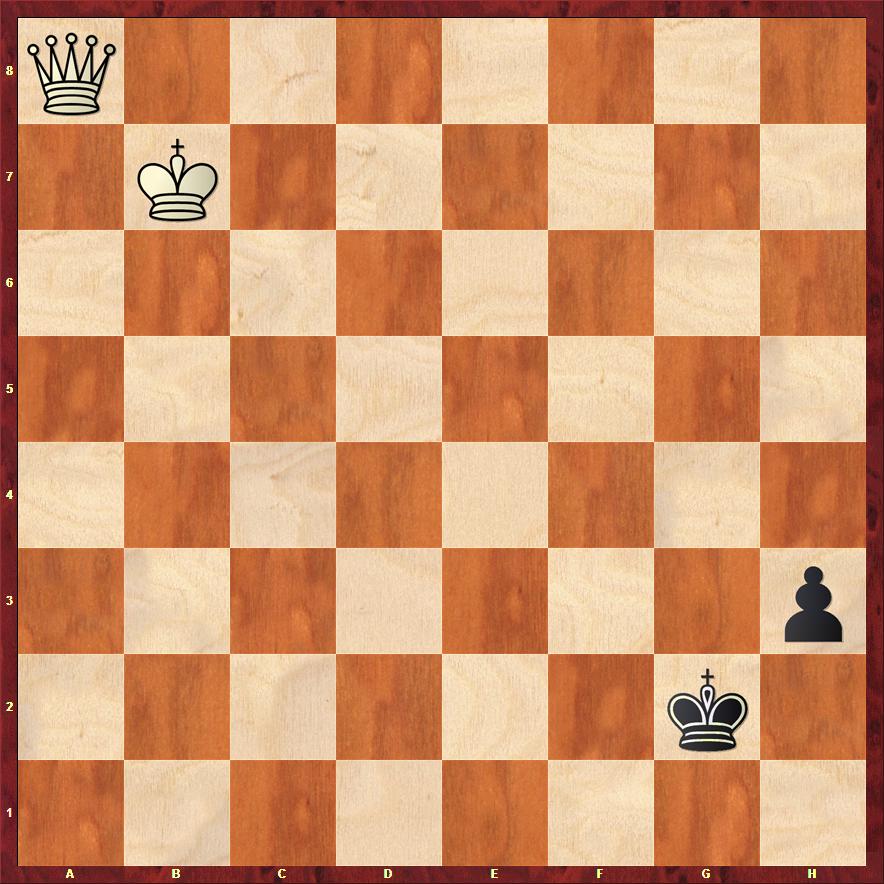
The game continued 1.Qg8+ Kf2 2.Qf7+ Kg2 3.Qg6+ Kh1
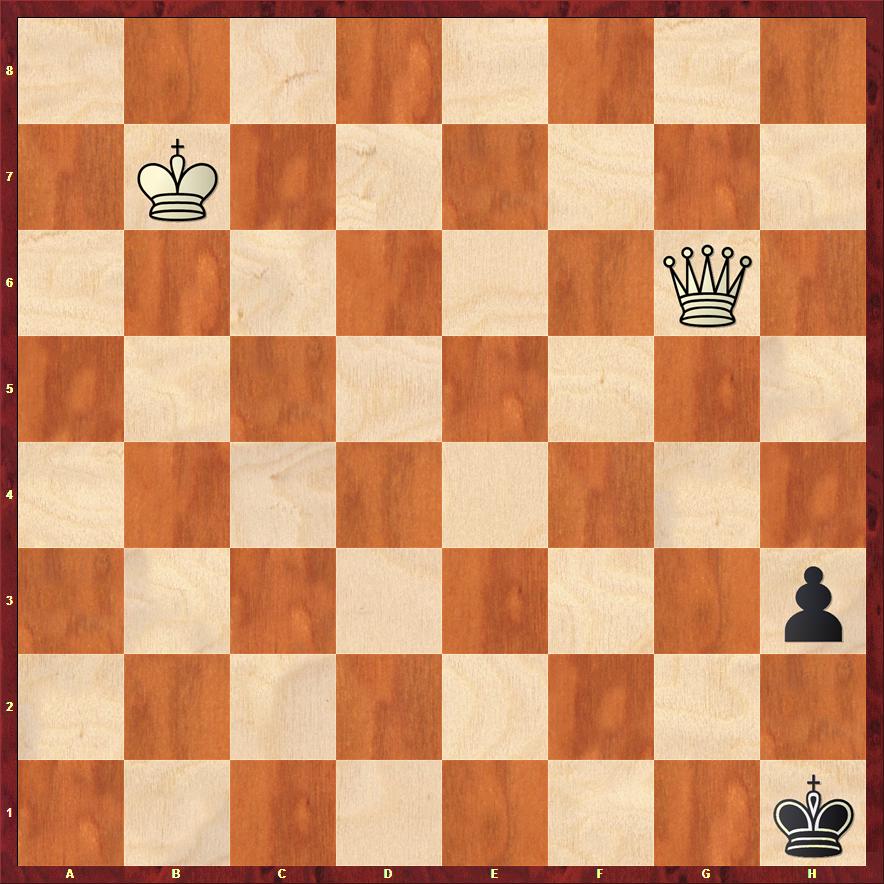
4.Qg3??
[4.Qe4+ wins we must not let the pawn reach the 7th rank 4... Kg1 5.Qg4+ Kh2
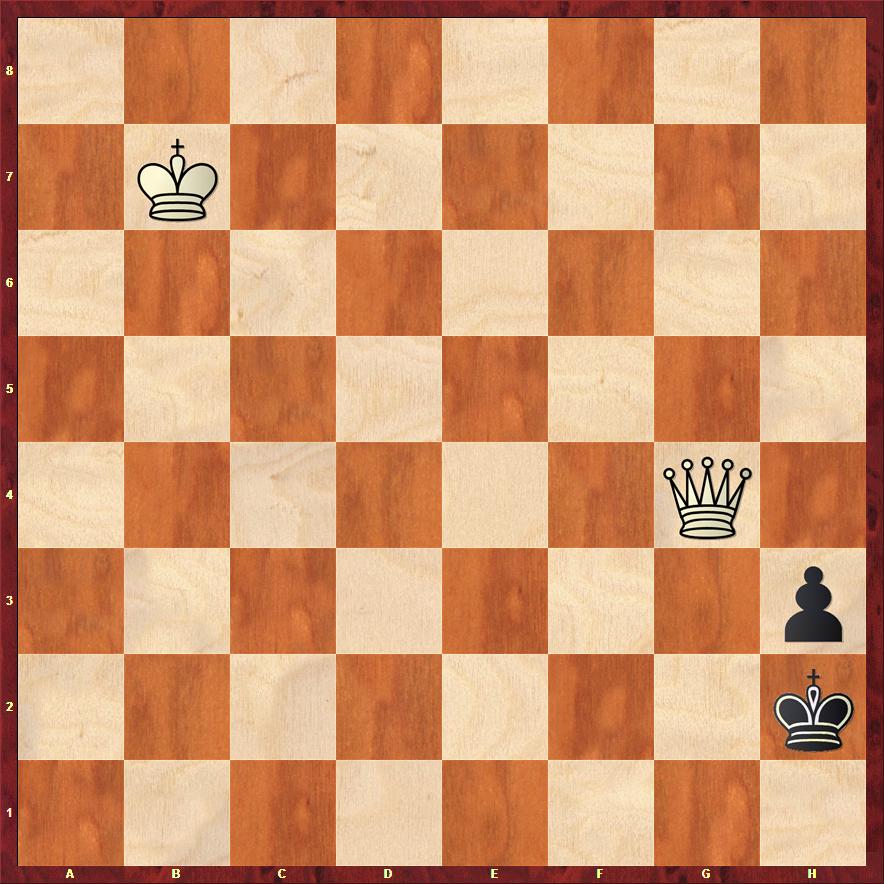
and 6.Kc6 leaves black in zugswang]
in the game 4... h2 leads to a draw
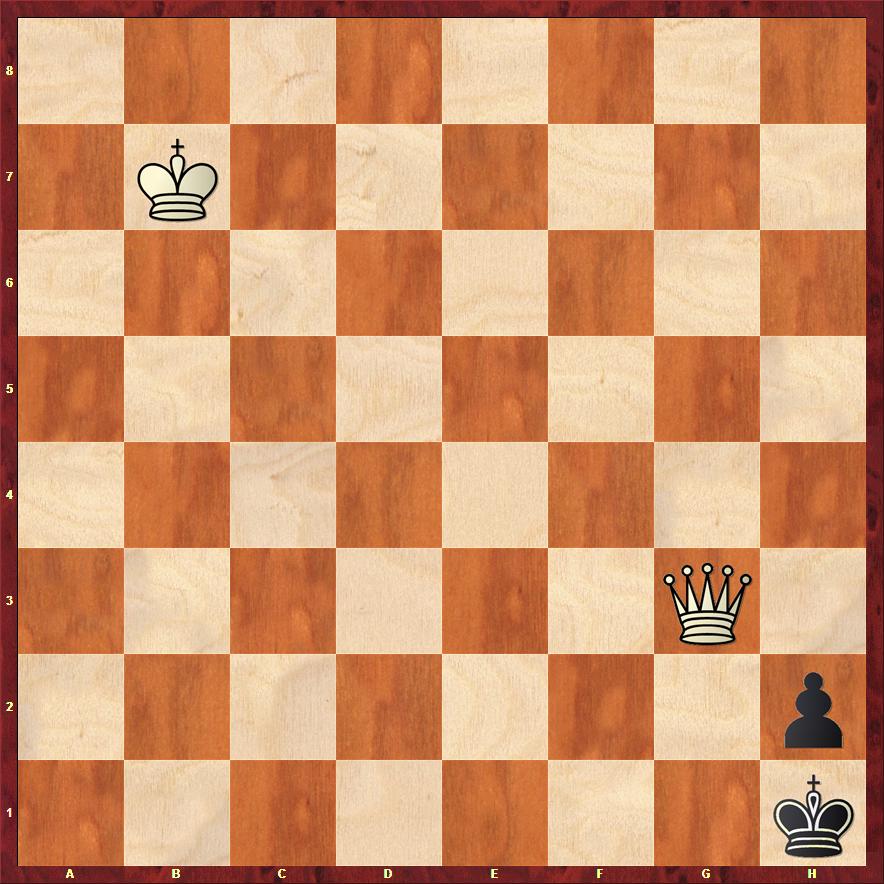
as bringing the king nearer is stalemate.
The Q vs P Theory
When I had this disappointment of failing to win a position in which I considered myself a queen up I went out and borrowed from the library (no internet or tablebases in those days) Reuben Fine's Basic Chess Endings and while my friends were at the school disco discovering girls I was seduced by some lovely chess positions.
Here is what I discovered about this ending.
Firstly unless the pawn can reach the 7th the defender is lost.
Secondly unless the pawn is on the bishop's or rook's file the defender is still lost.
The basic concept is to force the black king in front of the pawn so that you can move your king closer without allowing black to queen. So in this basic position white wins easily.
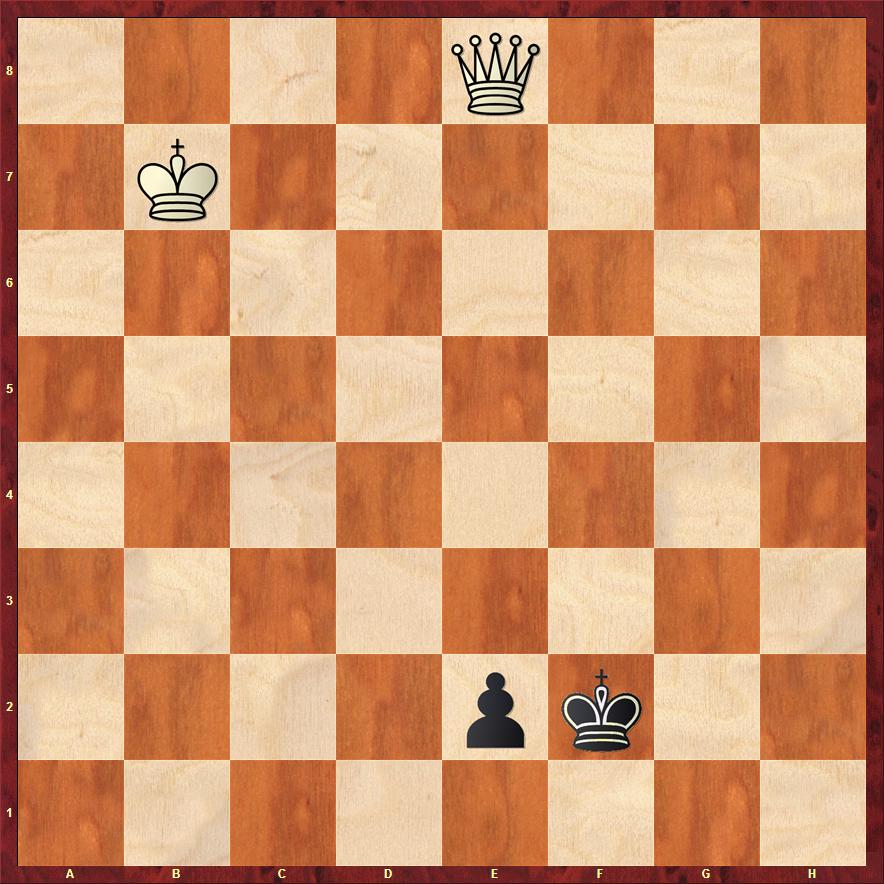
1.Qf7+ Kg2 2.Qe6 Kf2 3.Qf5+ Kg2 4.Qe4+ Kf2 5.Qf4+ Kg2 6.Qe3 Kf1 7.Qf3+ Ke1
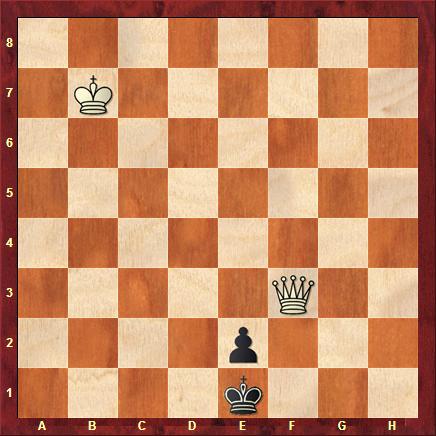
8.Kc6 Kd2 when we repeat the theme 9.Qf4+ Kd1 10.Qd4+ Kc1 11.Qc3+ Kd1 12.Qd3+ Ke1
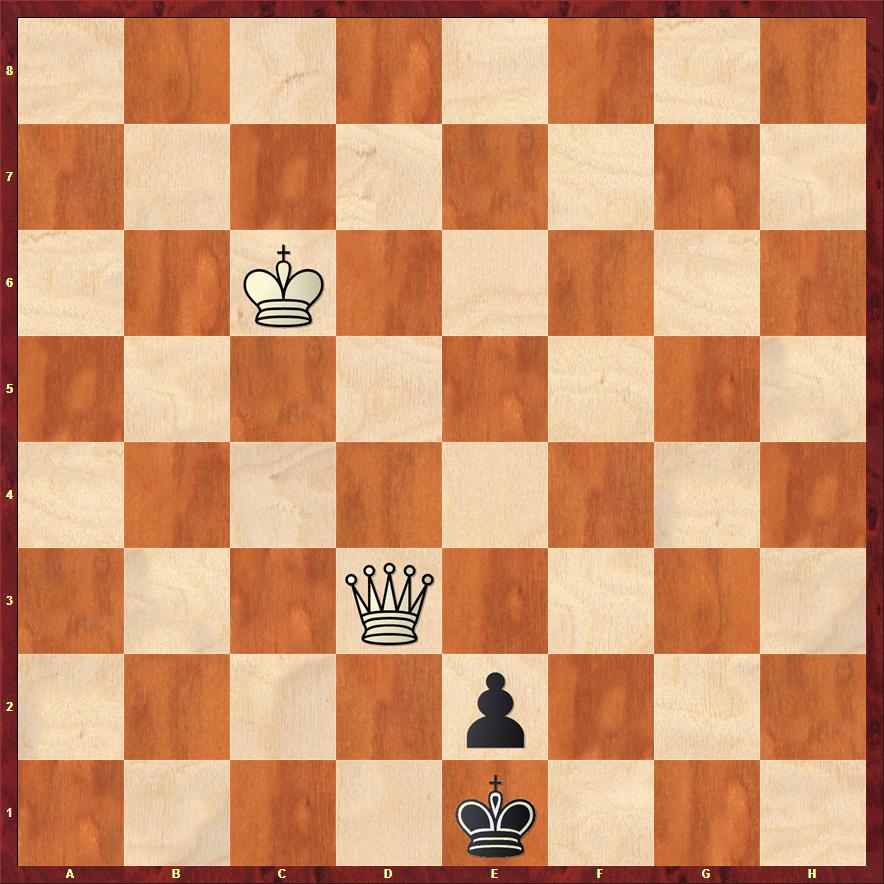
and 13.Kd5 etc eventually winning the pawn.
However with the pawn on the bishop's or rook's file as in Amardip's game its a different matter and if the white king is far away as it usually is in these endings the game is drawn.
This is because in this position
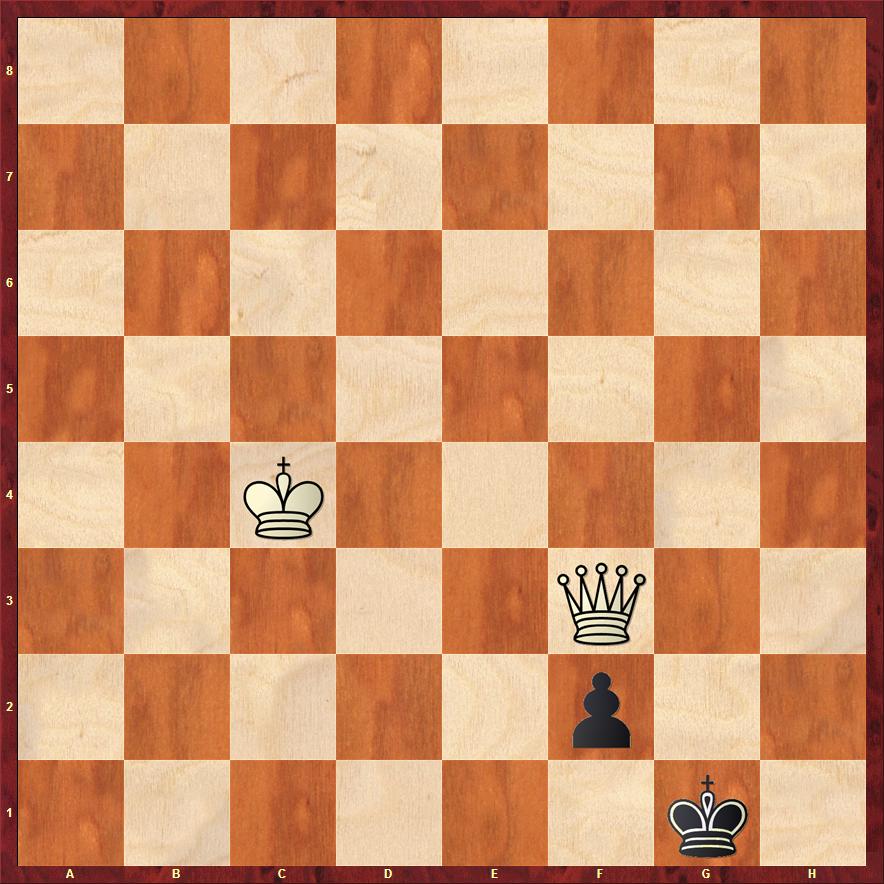
1.Kh1 Qxf2 is stalemate
and as we have previously seen in this position
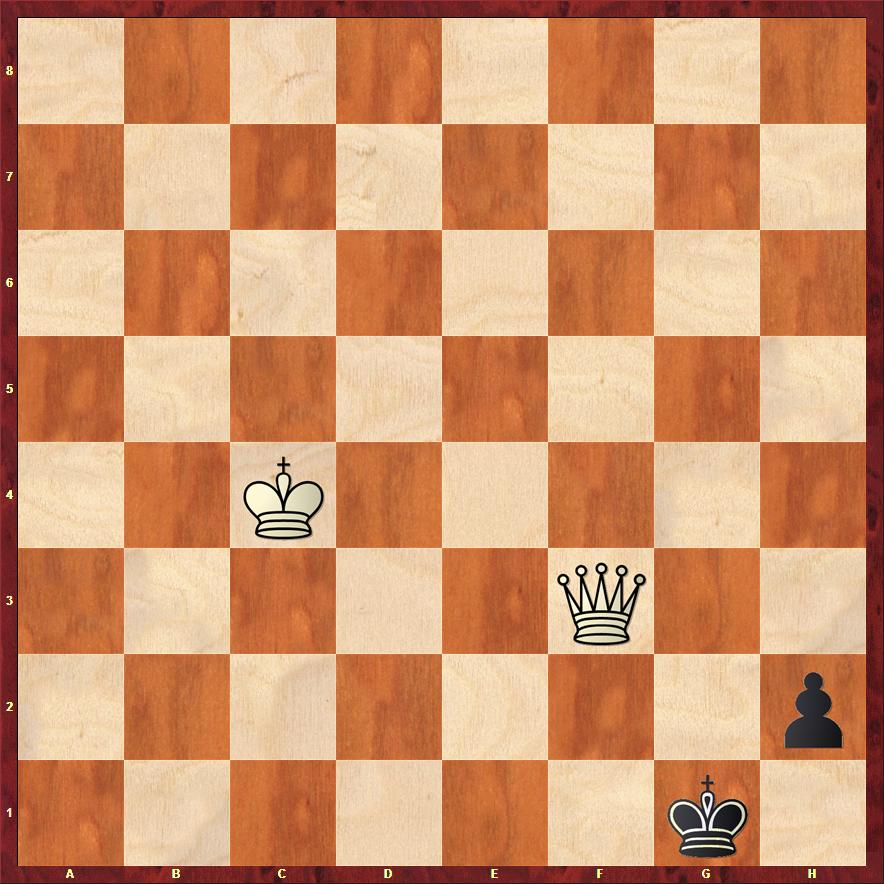
1.Qg3+ Kh1 2.Kd3 is stalemate.
If the story ended here life would be simple and we could all go to bed knowing that if we have a bishop's or rook's pawn on the 7th with our king nearby then its a draw but not so fast.
The Exceptions
This is where the beauty lies.
Lets look at this position where with the white king anywhere other than in the red squares its a win for white.
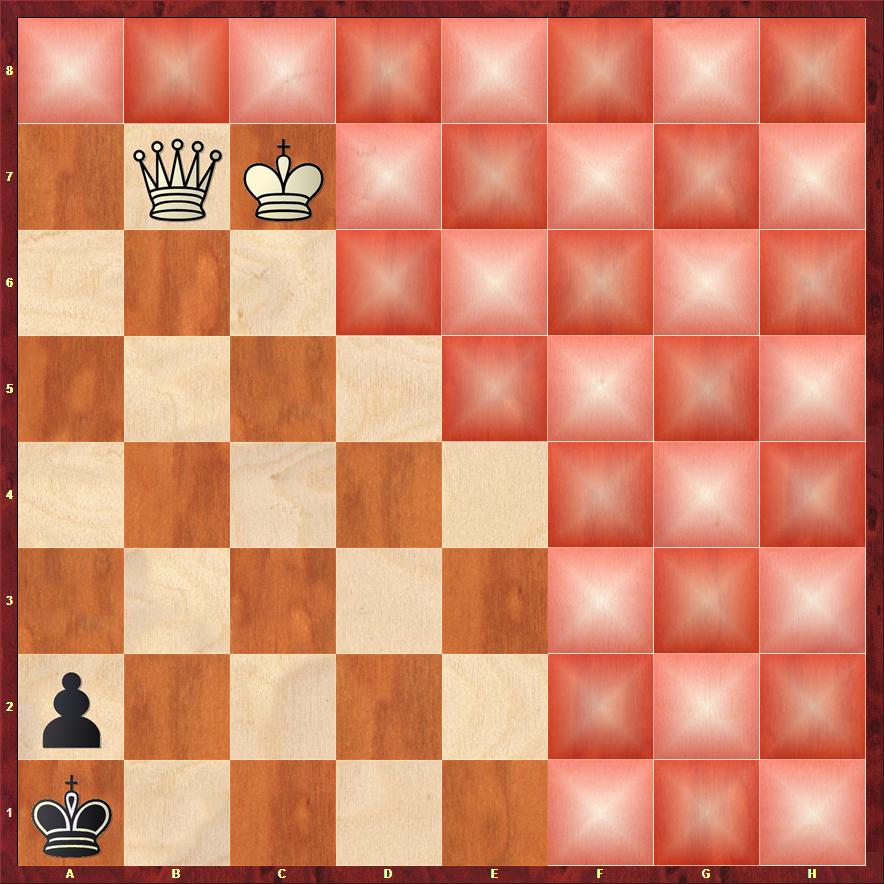
How ? well in the above position the game would continue;
1.Kb6 cleverly blocking the action of the queen and relieving checkmate while at the sametime bringing the king nearer 1... Kb1 2.Kc5+ Kc1 (if 2... Ka1 then Kb4 etc) 3.Kc4!!
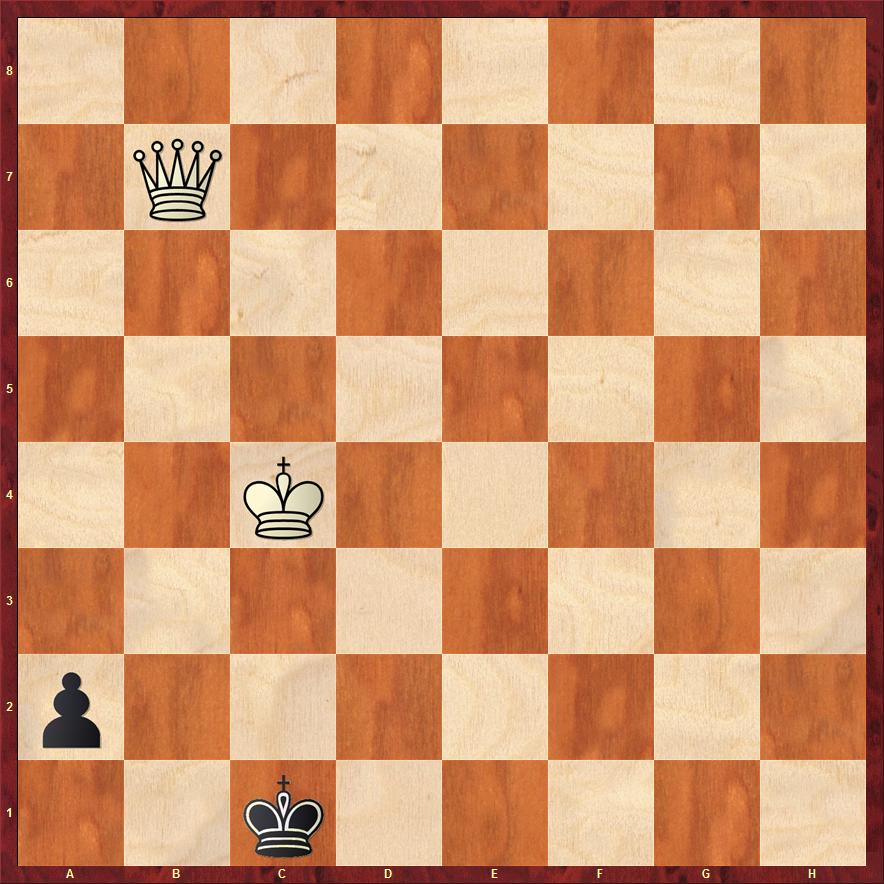
a brilliant move 3...a1=Q 4.Qh1+ Kb2 5.Qg2+ Kb1 (5... Ka3 doesn't save the day 6.Qf3+ Kb2 7.Qe2+ Ka3 8.Qd3+ Kb2 9.Qd2+ Ka3 10.Qb4+ Ka2 11.Qb3#) 6.Kb3
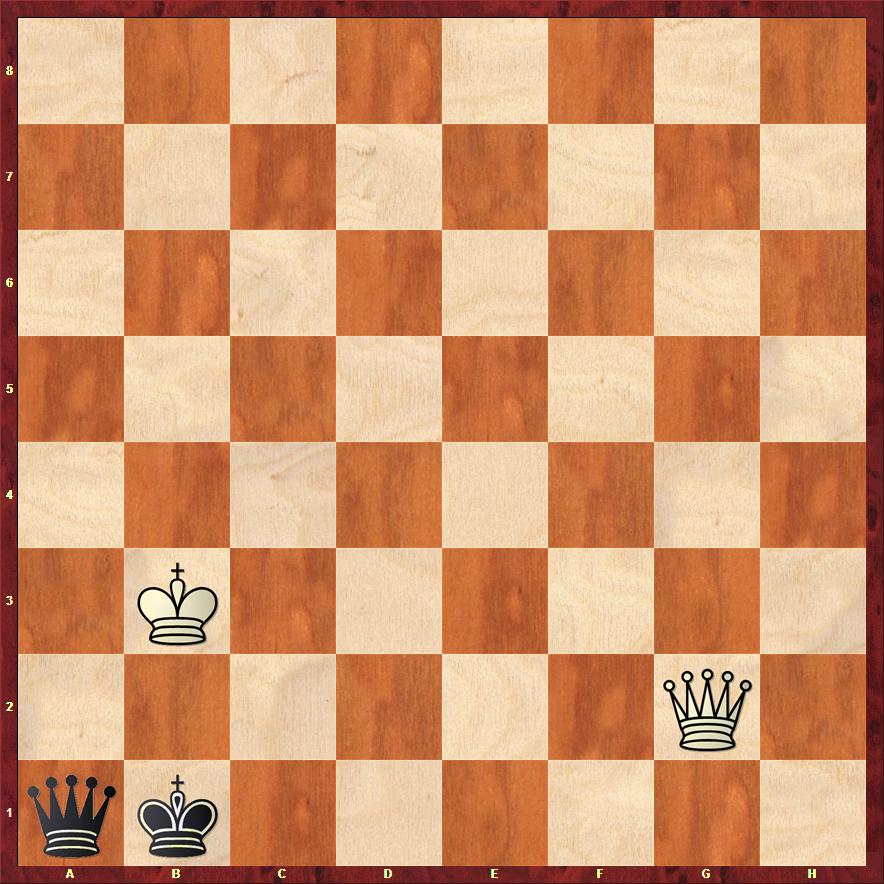
when I first saw this position I was amazed. Its checkmate in 2 as there are no moves for the black queen to make that do not allow checkmate.
There are similar checkmate ideas against the bishop's pawn as well eg.
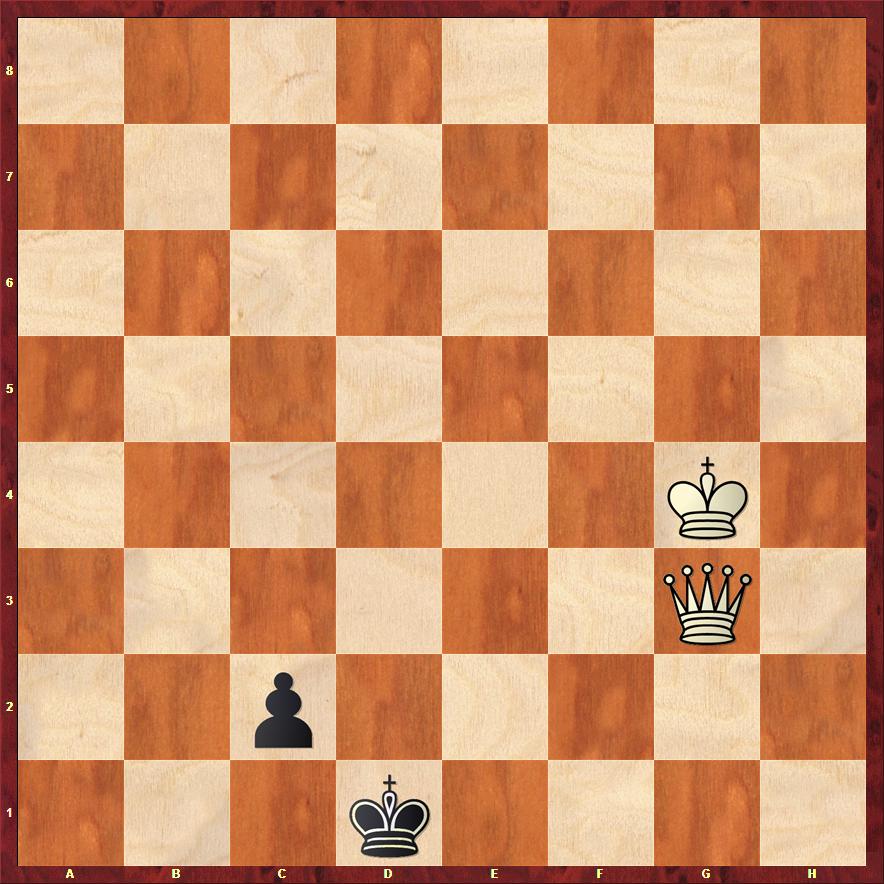
1.Qb3 wins for white as it prevents the black king from reaching the a1 square. The game might continue 1... Kd2 2.Qb2 Kd1 3.Kf3
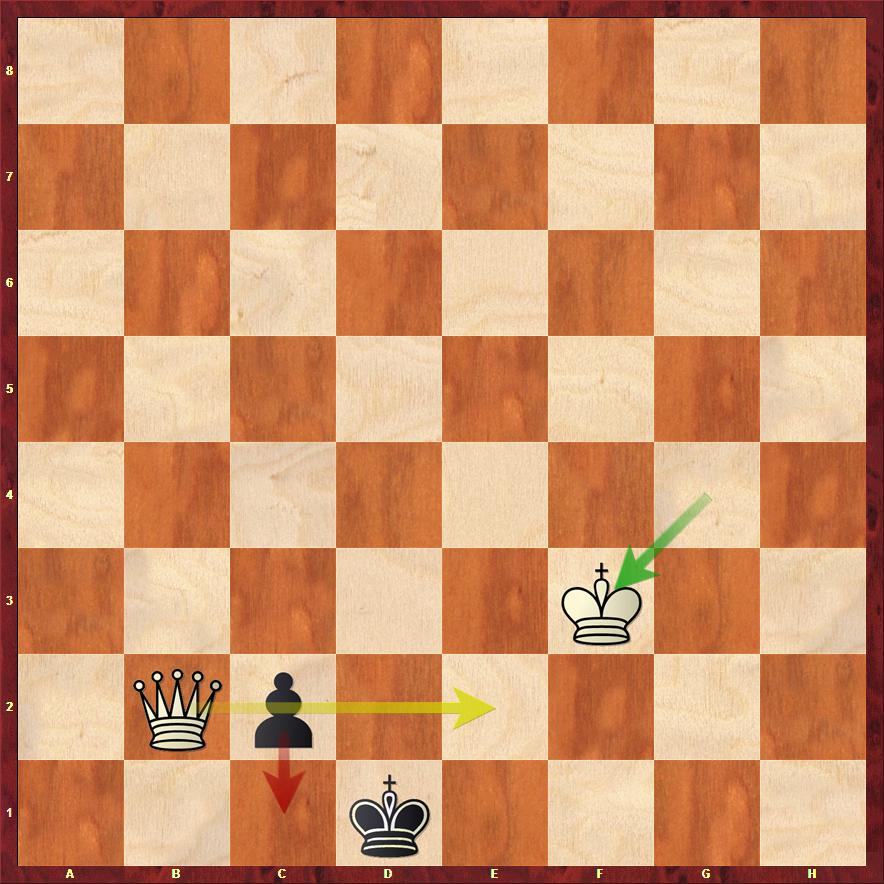
when 3... c1=Q allows 4.Qe2 checkmate.
Fewer pieces does not necessarily mean simpler positions.
|
|
|